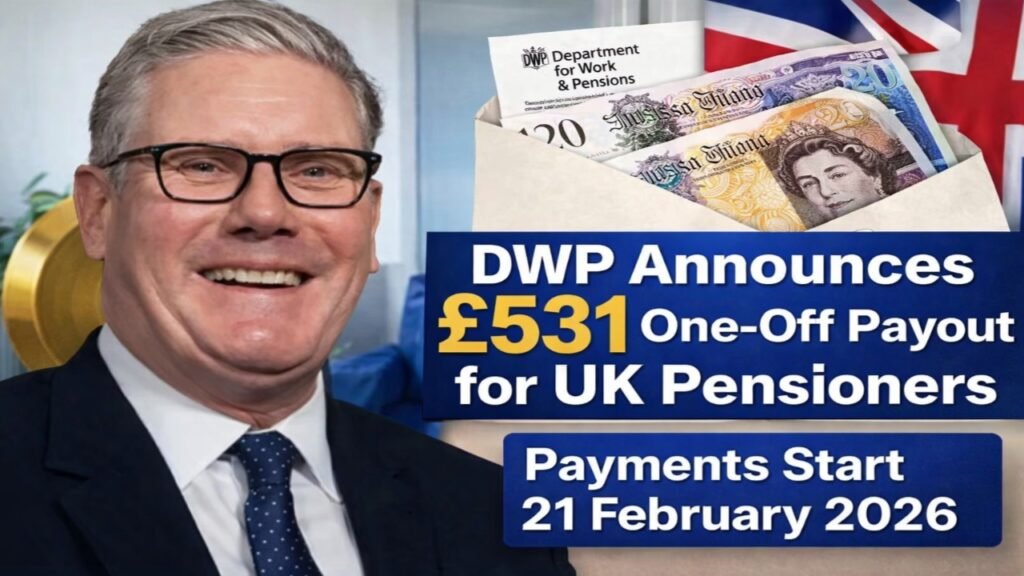
Hello Everyone, The Department for Work and Pensions (DWP) has confirmed a £531 one-off payout for eligible UK pensioners, with payments scheduled to begin from 21 February 2026. The announcement has brought relief to many older households facing ongoing pressure from rising energy, food and housing costs. According to the UK Government, this targeted support is designed to help vulnerable pensioners manage essential expenses during the late winter period, when bills are typically higher.
What Is the £531 Payment?
The £531 payout is a single, non-recurring financial support payment. It is not a loan and does not need to be repaid. The payment is intended to provide additional help alongside existing pension or benefit income.
Officials have described the measure as temporary cost-of-living support rather than a permanent increase in State Pension rates. Eligible recipients will receive the money directly into the same bank account where they normally receive their pension or qualifying benefits.
Who Is Eligible?
Eligibility will depend on receiving certain income-related benefits during a specified qualifying period. While full guidance will be outlined by DWP, the payment is expected to focus on pensioners on lower incomes. Those who may qualify include:
- Pensioners receiving Pension Credit
- Individuals on income-related Employment and Support Allowance
- Recipients of income-based Jobseeker’s Allowance
- Older people receiving Universal Credit with limited income
Exact qualifying dates will be confirmed in official DWP communications. Meeting the criteria during the assessment window is essential.
Payment Dates Explained
Payments are set to begin from 21 February 2026 and may continue over several weeks. Not everyone will receive the money on the same day. Staggered processing helps manage the large number of transactions nationwide.
If eligible, pensioners should see the £531 credited automatically. There is usually no need to apply separately. However, if payment has not arrived after the official window closes, contacting DWP directly is advised to check status and eligibility.
Why February 2026?
Late winter is traditionally one of the most financially challenging times for pensioner households. Heating usage remains high, and many households are still recovering from increased seasonal spending.
By scheduling the payout for February, the Government aims to ease pressure before the end of the financial year. Officials have highlighted that targeted timing ensures support reaches those most in need when costs are typically at their peak.
Will It Affect Other Benefits?
One of the key concerns among pensioners is whether receiving £531 could reduce other benefits. According to current guidance, the one-off payment is not expected to count as taxable income.
It should not impact entitlement to existing benefits, as it is classified as additional cost-of-living support. However, recipients are encouraged to review official information once detailed guidance is published to ensure clarity regarding their personal circumstances.
How the Money Will Be Paid
The payment will be made automatically into the bank account already registered with DWP. Recipients should look for a payment reference linked to the department’s standard identification format.
- Paid directly to existing bank account
- No application required for most claimants
- Same payment method as pension or benefits
- Official payment reference included
It is important to be cautious of scams. DWP does not ask for bank details by text or unsolicited calls regarding such payments.
Public Response
Reaction across the UK has been largely positive, particularly among advocacy groups representing older citizens. Many pensioners have expressed relief at additional support during a period of continued economic uncertainty.
However, some commentators argue that one-off payments provide only short-term relief. They suggest broader reforms may be needed to address structural cost-of-living challenges. Even so, for many households, £531 represents meaningful assistance during a demanding time of year.
Checking Your Eligibility
Pensioners unsure about their status should review their current benefit awards. Receiving Pension Credit is often a key qualifying factor for similar support schemes. Unfortunately, many eligible individuals do not claim Pension Credit despite being entitled.
Checking entitlement could not only secure this £531 payment but also unlock additional support such as council tax reductions or winter heating assistance. Taking a few minutes to verify eligibility may make a significant difference.
Avoiding Scams
Whenever a government payment is announced, fraud attempts tend to rise. Pensioners should remain cautious of messages asking for personal or banking information.
DWP will never request sensitive details via unsolicited emails or text messages. If in doubt, contact the department directly using official contact details. Protecting personal information is essential, especially during widely publicised payment periods.
Wider Support Measures
The £531 payout forms part of a broader cost-of-living support strategy. Alongside this payment, existing measures such as the Winter Fuel Payment and Cold Weather Payment remain in place for eligible households.
Government officials state that targeted interventions help balance support with fiscal responsibility. While debate continues around long-term pension reform, the immediate focus remains on easing pressure for lower-income retirees during winter 2026.
Conclusion
The £531 one-off payout announced by DWP, beginning 21 February 2026, offers timely financial support to eligible UK pensioners. While not everyone will qualify, those receiving income-related benefits may see automatic payments without needing to apply. Staying informed, checking benefit status and remaining alert to scams will ensure pensioners receive the assistance smoothly and securely during a financially demanding period.
Disclaimer: This article is for general informational purposes only and does not constitute financial or legal advice. Eligibility rules and payment details may change. Pensioners should consult official DWP guidance or seek independent advice regarding their specific circumstances before making financial decisions.