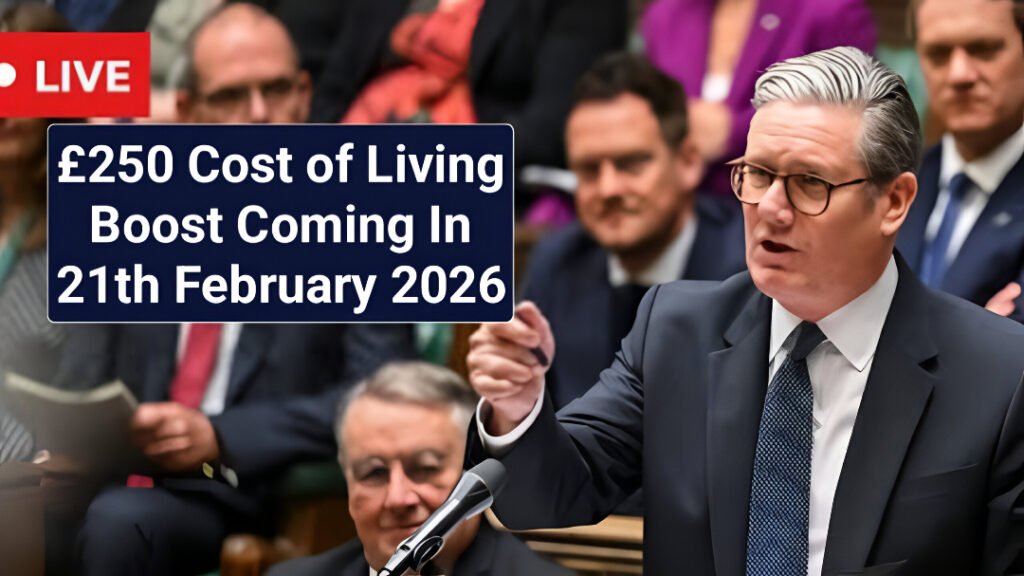
Hello Everyone, The UK Government has confirmed a £250 Cost of Living Boost set to begin from 21 February 2026. The announcement, delivered by the Department for Work and Pensions (DWP), aims to provide additional financial support to households still feeling the pressure of rising food, energy and housing costs. With many families continuing to budget carefully in early 2026, this one-off payment is expected to bring timely relief. Here’s everything you need to know about who qualifies, how payments will be made, and what happens next.
Why the £250 Payment Is Being Introduced
Although inflation has eased compared to previous years, many households across the UK are still facing higher living costs than before the crisis period. Energy bills remain unpredictable, grocery prices are elevated, and rent increases continue in many areas.
The government says the £250 payment is designed to bridge the gap during the late winter period, when heating bills are typically at their highest. February can be a financially tight month, especially for pensioners and low-income families, making the timing of this support particularly significant.
Who Is Behind the Payment
The payment will be administered by the Department for Work and Pensions, which has handled previous Cost of Living Payments over the past few years. The DWP will work alongside HM Revenue and Customs where required, ensuring eligible claimants receive funds directly into their bank accounts.
Officials have confirmed that no separate application will be required for most people. If you qualify through your existing benefit claim, the payment should arrive automatically. This approach is intended to reduce delays and administrative burden.
Who Qualifies for the £250 Boost
Eligibility is expected to focus on people already receiving certain means-tested benefits. While full details will be confirmed closer to the payment date, qualifying benefits are likely to include:
- Universal Credit
- Pension Credit
- Income-based Jobseeker’s Allowance
- Income-related Employment and Support Allowance
- Income Support
- Tax Credits (in some cases)
Claimants must usually have been entitled to one of these benefits during a specified qualifying period. If you start a claim after the cut-off date, you may not receive this particular payment.
Pensioners and Additional Support
Pensioners on low incomes are among the key groups expected to benefit. Those receiving Pension Credit may qualify automatically if they meet the eligibility window.
Many older residents have faced sustained pressure from rising household bills, even with schemes like the Winter Fuel Payment. The £250 boost is designed to sit alongside existing support rather than replace it. Pensioners are encouraged to check their Pension Credit eligibility, as some may still be missing out on benefits they are entitled to claim.
When Will You Be Paid
Payments are scheduled to begin from 21 February 2026. The rollout is expected to take place over several days rather than all at once.
If you qualify, the money should appear in your bank account automatically, labelled similarly to previous DWP Cost of Living Payments. There is no need to contact the department unless you believe you are eligible and have not received the payment after the official distribution window has closed.
How the Payment Will Appear
The £250 will be paid directly into the same bank account where you receive your regular benefits. Most people will see a payment reference including “DWP COL” or similar wording.
It’s important to remain cautious of scams. The DWP does not ask for bank details by text message or email in relation to Cost of Living Payments. If you receive suspicious messages claiming you must apply or provide details, do not respond and report the communication immediately.
Impact on Other Benefits
One common concern is whether the £250 payment will affect other benefits or tax liabilities. In line with previous Cost of Living Payments, this boost is not expected to count as taxable income.
It should also not impact existing benefit calculations or the benefit cap. The payment is separate from regular entitlements and is designed as additional support. However, claimants should always keep their circumstances updated with the DWP to avoid unrelated overpayment issues.
What If You Don’t Receive It
If you believe you qualify but have not received the payment after the rollout period, you may be able to submit a missing payment query through official government channels. Before doing so, double-check that you met the qualifying criteria during the required assessment period.
Delays can sometimes occur due to bank processing times. It’s advisable to wait until the DWP confirms that all payments have been completed before raising a concern.
Wider Cost of Living Context
The UK has experienced several waves of government support since the height of the cost-of-living crisis. From energy bill discounts to direct payments, targeted measures have aimed to protect the most vulnerable.
While economic conditions have improved compared to previous years, many households still report difficulty covering essentials. The £250 February 2026 payment reflects ongoing recognition that financial recovery is uneven and that certain groups remain at risk of hardship.
Practical Advice for Households
Receiving a one-off payment can offer breathing space, but financial advisers recommend planning how to use it wisely. Consider prioritising overdue bills, topping up energy accounts, or building a small emergency buffer if possible.
Local councils may also provide additional support through hardship funds or council tax relief schemes. Combining the £250 boost with other available assistance can maximise its impact, especially for families balancing multiple expenses.
Checking Your Eligibility Now
If you are unsure whether you qualify, reviewing your current benefit status is a good starting point. Make sure your claim details are up to date, including household income and living arrangements.
Those not currently receiving Pension Credit but on a low income should consider applying, as eligibility for this benefit can unlock access to additional support schemes beyond the £250 payment.
Final Thoughts
The £250 Cost of Living Boost arriving from 21 February 2026 offers welcome support at a time when many UK households continue to feel financial strain. By targeting those on means-tested benefits, the government aims to direct help where it is needed most. If you believe you qualify, ensure your benefit information is accurate and monitor official updates as the payment date approaches. Even a single payment can make a meaningful difference during the late winter months.
Disclaimer: This article is for general informational purposes only and is based on publicly available announcements at the time of writing. Payment dates, eligibility rules and qualifying periods may change. Always refer to official UK Government or DWP guidance for the most accurate and up-to-date information regarding benefits and support schemes.